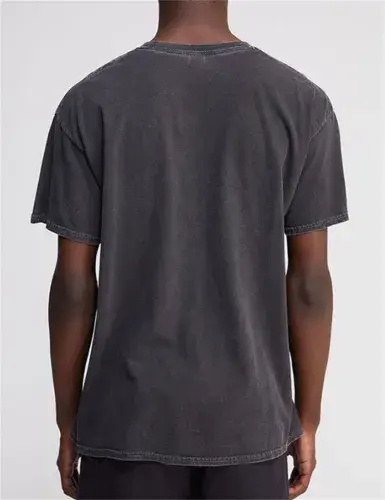
The production process of men's T-shirts is a complex and intricate process that involves many steps, from the initial design to the final inspection. The materials, color, and design are all carefully considered, and quality control measures are implemented throughout the manufacturing process to ensure that each T-shirt meets the required standards and customer needs.
The production process of men's T-shirts generally involves several key steps:
1. Design: Based on the design requirements, the T-shirt design and pattern are created using hand-drawing or design software.
2. Fabric and Color Selection: Suitable materials (such as cotton, polyester, etc.) and colors are selected based on the design requirements, or prefabricated Men's T-shirt materials may be used.
3. Fabric Cutting: Using tailoring tools, the main Men's Shirt fabric is accurately cut, including the front, back, and sleeves.
4. Sewing: The cut pieces are then sewn together, including the front and back of the T-shirt, the sleeves, and the neckline. Quality control during the sewing process is essential to ensure that the T-shirt meets the design and size requirements.
5. Printing: If required, the desired pattern is transferred to the printing machine, and the appropriate printing technique is used to apply the pattern to the T-shirt.
6. Final Finishing: After printing or sewing, the T-shirt is trimmed, including cutting off loose threads, buttons, and labels.
7. Quality Inspection: Every Men's T-shirt And Polo is then inspected to ensure that it meets the quality standards and design requirements.
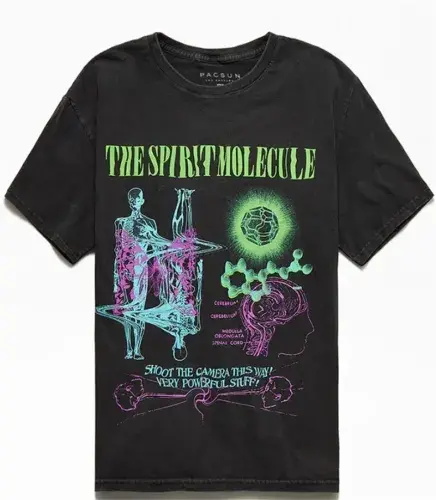
The next step is to select the materials and colors. Top-quality materials are chosen to ensure the T-shirt is durable and comfortable to wear. Various fabric options, including cotton, polyester, or a blend of materials, may be considered. In addition, the color selection is also carefully considered, often based on the season or fashion trends.
The next step is the cutting process. The T-shirt is accurately cut using tailoring tools, including a pattern piece or a virtual template. Each piece is then carefully inspected for accuracy and quality control before moving on to the next stage of the manufacturing process.
The pieces are then assembled by sewing. The front and back of the T-shirt are stitched together, followed by the sleeves and neckline. It is at this stage that the finished product starts to take shape.
After printing or sewing, the T-shirt is then trimmed and checked for quality control. Straight seams, even stitches, no loose threads, etc. are signs of a well-made T-shirt that has passed the quality inspection.